Cohorta AI was born from a real journey, not from a slide deck
What a patient truly needs along the journey cannot be learned from the outside. It has to be lived. This platform was built by someone who walked the path himself.
I was diagnosed with CLL at the age of 38, unusually young for this disease. Today, 16 years have passed since that diagnosis.
What began as fear, uncertainty, and six long years of monitoring and waiting has become a deeply personal, long-term clinical journey, through Watch & Wait, chemotherapy, disease relapse, an exceptional approval for an innovative treatment, and a deep, durable response that continues to this day.
For six years I lived under Watch & Wait. In many ways, the beginning was one of the most frightening periods: I was not “sick enough” to start treatment, yet I was completely alone with the fear, the uncertainty, and endless questions.
My entire interaction with the healthcare system was usually a fifteen-minute appointment with my doctor, once every three or four months. Between visits, there was no one. I searched desperately for reliable information, a clear explanation, and someone who would simply listen, reassure, guide, and help me understand how to go on living a full life in that situation. I did not find it.
Only later came FCR chemotherapy, my first line of treatment. When the disease returned I was offered other options, but I strongly resisted treatments that would have meant staying on therapy for the rest of my life.
At the time, Venetoclax was still considered a third-line treatment, but for me it became the next and most relevant option. I insisted on it with my physician, and eventually we obtained an exceptional approval for the treatment.
In the end, I was treated with Venetoclax for just 24 months. The results stunned everyone: I reached MRD-negative status. Today, more than six years later, I can say with confidence that I remain deep MRD-negative, and perhaps, cautiously, even use the word “cured”.
I was the first patient in Israel treated with Venetoclax in this context. It is worth noting that today, in many cases, Venetoclax is already a first-line option, partly thanks to the strong outcomes seen in my case and in many other patients.
Moreover, when treatment is given earlier, as part of an Early Intervention approach, a shorter course, such as 12 months, may sometimes be enough, rather than the 24 months I needed after chemotherapy and severe clinical disease.
I want to stress: this is my personal story, not a message that favors one drug over another. The world of CLL treatment has changed dramatically in recent years, and there are now multiple effective options that can suit different patients, at different stages, and with different clinical profiles.
Alongside Venetoclax there are other therapeutic classes, including BTK inhibitors such as Acalabrutinib, Zanubrutinib, and Ibrutinib, combinations with antibodies such as Obinutuzumab, and further approaches chosen according to disease status, patient age, comorbidities, genetic markers, patient preferences, and the treating physician’s judgment.
In other words, this is not one treatment that fits everyone, it is a broad, advanced, and increasingly personalized treatment landscape.
That is why Cohorta AI is not built around a single drug. It is built around the patient, around their clinical journey, and around the ability to understand over time which treatment is right for which patient, at which stage, under which circumstances, and with what real-world outcomes.
In a sense, I am myself a real-world-evidence story: a 16-year disease journey, a transition between treatment lines, complex medical decisions, and a deep, durable outcome, all in one body, over many years.
Cohorta AI was born from exactly that gap: from the loneliness of the Watch & Wait years, and from the information, guidance, and support I searched for but could not find. I saw firsthand what patients are missing, and what the healthcare system does not always manage to see.
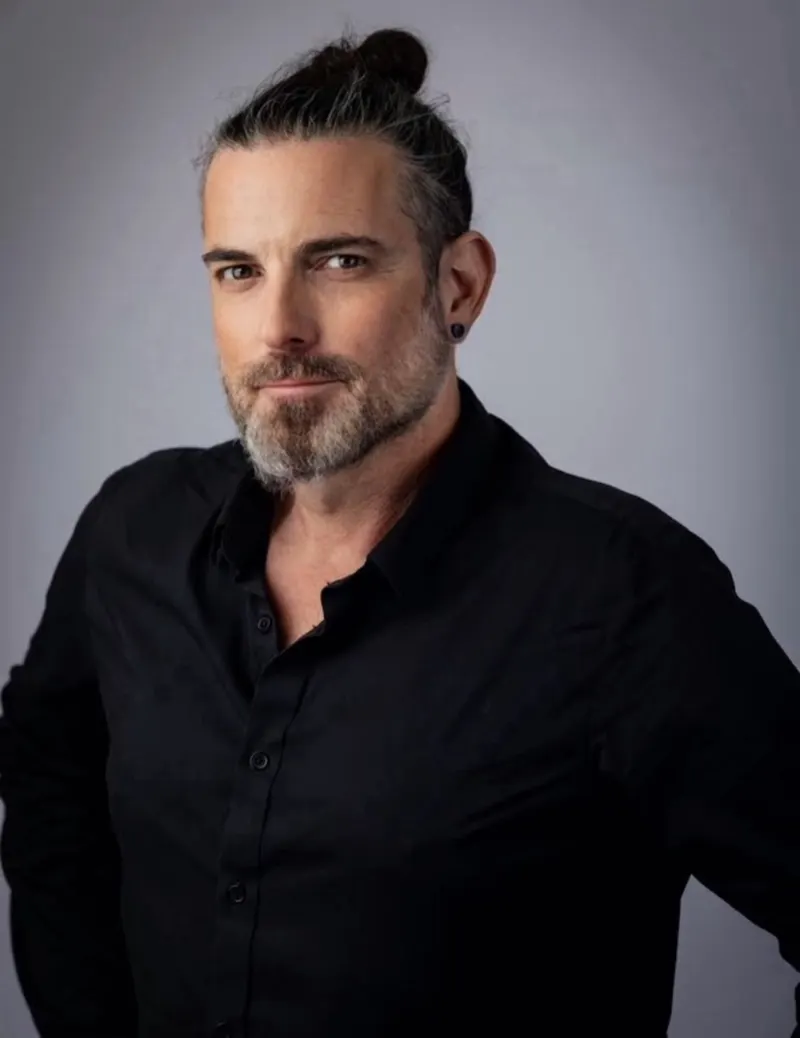
Elad Keren
Founder & CEO · Cohorta AI
Emotional support is the front door. Longitudinal intelligence is the value.
A patient who feels accompanied and understood stays engaged, and every interaction, with consent and anonymized, joins one longitudinal spine. Combining eight intelligence layers on the same journey creates strategic value that no single vantage point can deliver.
Real-world patient signals
Longitudinal journey intelligence
Emotional & behavioral monitoring
Personalized education
Clinical-trial awareness
Early-intervention signals
Aggregated health-org intelligence
Continuous RWE generation
To help patients feel accompanied and understood along the journey, while generating aggregate, anonymized insights that improve understanding, care and research.
To become the leading patient-journey intelligence platform across chronic, hematologic and oncologic diseases.
It all starts with the journey, and the intelligence follows
As a patient myself, I insist: raw data is never sold
I was once promised privacy, and I know how fragile it is. So here, privacy is not a marketing promise but an architecture: only aggregate, anonymized signals ever leave the system. No PII, no drill-through to a single patient, a k≥10 cohort floor, and every access logged.
Note: the personal story above is a narrative asset only, my own personal data is not part of the analytics pipeline.
Have a patient journey worth understanding deeply?
A pilot, a research partnership, or an enterprise rollout, let’s talk.